基因名称(Gene Name)
CYR61 CCN1 GIG1 IGFBP10
蛋白名称
Protein CYR61 (CCN family member 1) (Cysteine-rich angiogenic inducer 61) (Insulin-like growth factor-binding protein 10) (IBP-10) (IGF-binding protein 10) (IGFBP-10) (Protein GIG1)
组成
PBS, 50% glycerol, 0.05% Proclin 300, 0.05%BSA
来源
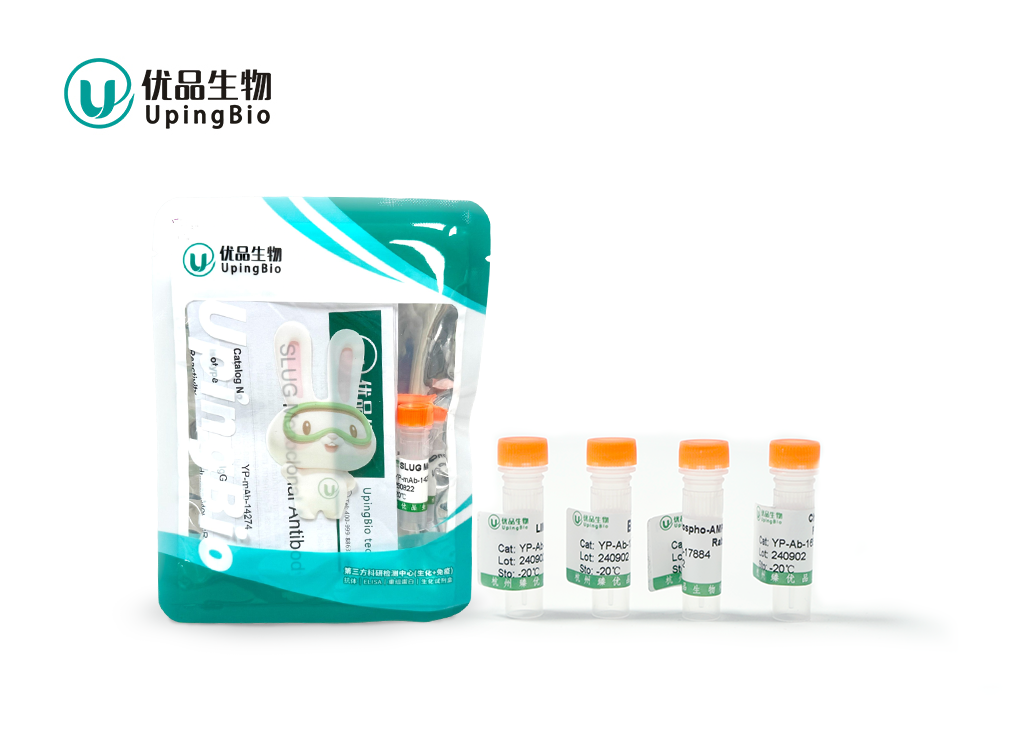
Monoclonal, Rabbit,IgG
稀释比例
IHC 1:100-1:200; WB 1:2000-1:10000; IF 1:200-1:1000; ELISA 1:5000-1:20000; IP 1:50-1:200; Note: For IHC, we suggest antigen retrieval with TE buffer pH 9.0
储存
-15°C to -25°C/1 year(Do not lower than -25°C)
其他名称
CYR61;Protein CYR61 (CCN family member 1) (Cysteine-rich angiogenic inducer 61) (Insulin-like growth factor-binding protein 10) (IBP-10) (IGF-binding protein 10) (IGFBP-10) (Protein GIG1);CYR61 CCN1 GIG1 IGFBP10
背景
The secreted protein encoded by this gene is growth factor-inducible and promotes the adhesion of endothelial cells. The encoded protein interacts with several integrins and with heparan sulfate proteoglycan. This protein also plays a role in cell proliferation, differentiation, angiogenesis, apoptosis, and extracellular matrix formation. [provided by RefSeq, Sep 2011],
功能
Promotes cell proliferation, chemotaxis, angiogenesis and cell adhesion. Appears to play a role in wound healing by up-regulating, in skin fibroblasts, the expression of a number of genes involved in angiogenesis, inflammation and matrix remodeling including VEGA-A, VEGA-C, MMP1, MMP3, TIMP1, uPA, PAI-1 and integrins alpha-3 and alpha-5. CYR61-mediated gene regulation is dependent on heparin-binding. Down-regulates the expression of alpha-1 and alpha-2 subunits of collagen type-1. Promotes cell adhesion and adhesive signaling through integrin alpha-6/beta-1, cell migration through integrin alpha-v/beta-5 and cell proliferation through integrin alpha-v/beta-3.,similarity:Belongs to the CCN family.,similarity:Contains 1 CTCK (C-terminal cystine knot-like) domain.,similarity:Contains 1 IGFBP N-terminal domain.,similarity:Contains 1 TSP type-1 domain.,similarity:Contains 1 VWFC domain.,subunit:Interaction with integrins is heparin- and cell-type-dependent and promotes cell adhesion. In skin fibroblasts it binds ITGA6/ITGB1, in endothelial cells, binds ITGAV/ITGB3 and in platelets, ITGA2B/ITGB3. Binds, in vitro, ITGAV/ITGB5.,